Sudoku continues to capture minds worldwide in 2025, blending fun with a boost for your brain. It’s no wonder people of all ages are drawn to this classic puzzle for relaxation and mental sharpness.
Every year, millions search for the easiest way to play sudoku, hoping to crack their first puzzle with confidence. Whether you’re brand new or just looking for a refresher, you’re in the right place.
This guide breaks down everything you need to know into simple, bite-sized steps. Follow along, and you’ll soon feel at home with any Sudoku grid.
Here’s what you’ll discover:
- Sudoku basics and rules
- How to set up your first puzzle
- Step-by-step solving methods
- Common mistakes to avoid
- Tips to level up your skills
Ready to unlock your inner Sudoku solver? Let’s get started!
Understanding Sudoku: The Basics
Sudoku is a classic logic puzzle that has captured minds all over the world. If you’re searching for the easiest way to play sudoku, it helps to start with the basics. Sudoku first appeared in Japan in the 1980s, but its roots trace back to French number puzzles from the 19th century. Today, Sudoku is found everywhere, with the iconic 9×9 grid forming the heart of the game. For those eager to dive deeper, the How to Play Sudoku Guide offers step-by-step instructions perfect for beginners.
What is Sudoku?
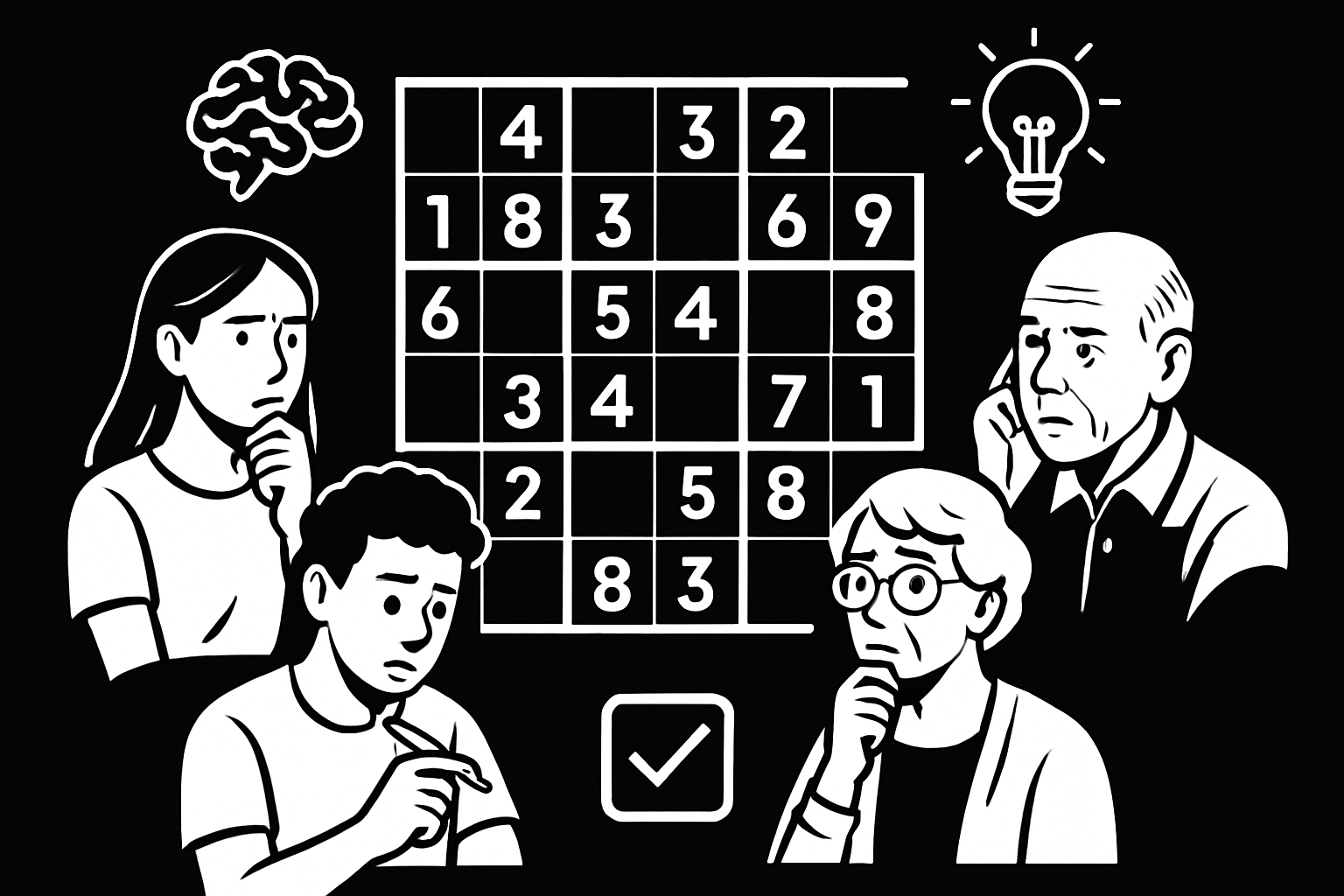
Sudoku is a number puzzle played on a 9×9 grid. The grid is divided into nine smaller 3×3 boxes. The puzzle’s goal is to fill every cell so that each row, column, and box contains the numbers 1 to 9 exactly once. Sudoku’s simple setup is why so many people consider it the easiest way to play sudoku for brain training.
The Objective of Sudoku
The main objective is straightforward: fill every row, column, and 3×3 box with the numbers 1 through 9, each appearing once. When completed, the grid is perfectly balanced. For example, a solved puzzle will have every number from 1 to 9 without repeats in any line or box.
Sudoku Rules Explained
Sudoku puzzles revolve around three core rules. First, every number from 1 to 9 must appear once in each row. Second, each column must have every number without repeats. Third, every 3×3 box needs all nine numbers. These rules drive the logic behind the easiest way to play sudoku and make each puzzle a unique challenge.
Types of Sudoku Puzzles
Sudoku comes in many forms beyond the standard 9×9 grid. Popular types include:
- 4×4 and 6×6 mini-Sudoku for quick games
- Classic 9×9 for traditional play
- Larger grids like 12×12 or 16×16 for experts
- Killer Sudoku, Hyper Sudoku, and other creative variants
As grid size increases, so does the puzzle’s complexity and challenge.
Why Sudoku is Great for the Brain
Sudoku isn’t just fun—it’s a powerful brain workout. Solving puzzles improves memory, strengthens logic, and boosts concentration. A 2022 NCBI study found regular Sudoku players enjoy sharper cognitive function. It’s no wonder the easiest way to play sudoku has become popular among seniors seeking mental fitness and younger players aiming to keep their minds sharp.
Common Tools and Formats
Sudoku is accessible almost anywhere. You’ll find puzzles in:
- Newspapers and magazines
- Puzzle books
- Mobile apps and online platforms
Digital Sudoku often includes features like hints, undo, and note-taking, making it easy for anyone to get started and practice at their own pace.
Who Can Play Sudoku?
Sudoku is for everyone, regardless of age or experience. Kids often start with 4×4 grids, learning logic in a fun way. Adults and seniors enjoy classic and advanced puzzles for relaxation and mental stimulation. No matter your skill level, the easiest way to play sudoku is to choose a puzzle that matches your comfort and curiosity.
Step 1: Setting Up Your First Sudoku Puzzle
Getting started is half the battle when searching for the easiest way to play sudoku. Before you dive in, let’s break down the setup process into simple, practical steps. Setting up correctly ensures you enjoy the experience and build a solid foundation for future puzzles.
Choosing Your Sudoku Puzzle
The first step in the easiest way to play sudoku is picking the right puzzle for your skill level. For beginners, start with puzzles labeled “easy” in newspapers, books, or apps. These often have more given numbers and a straightforward solution path.
If you’re unsure where to begin, try Easy Sudoku Puzzles Online for a curated selection of beginner-friendly puzzles. Online platforms usually sort puzzles by difficulty, making it simple to find one that suits your experience. As you gain confidence, you can gradually move to medium or hard puzzles, but always start with something manageable to avoid frustration.
Tools You’ll Need
Having the right tools is essential for the easiest way to play sudoku. For paper puzzles, grab a pencil and a good eraser. This allows you to make changes without mess. Some players also use colored pens to highlight patterns or candidates.
If you prefer digital, free sudoku apps and websites offer fantastic advantages. These include hints, undo options, and note-taking features that make learning smoother. Many apps even let you track your progress and provide daily challenges, helping you grow your skills at your own pace.
Understanding the Grid Layout
A clear grasp of the grid is crucial for the easiest way to play sudoku. The classic puzzle uses a 9×9 grid, divided into nine 3×3 boxes. Each row, column, and box must contain the numbers 1 to 9 without repeats.
Here’s a quick breakdown:
| Grid Part | Description |
|---|---|
| Row | Horizontal line, 9 cells |
| Column | Vertical line, 9 cells |
| Box | 3×3 square within the grid |
The 3×3 sub-grids are particularly important. Focusing on these helps you identify where numbers can and cannot go, which is a key strategy as you advance.
Reading the Given Numbers (Clues)
Every sudoku puzzle starts with some numbers already filled in. These “givens” are your clues and form the backbone of the easiest way to play sudoku. The more clues provided, the simpler the puzzle tends to be.
Compare two puzzles: one with many clues is typically easier to solve, while one with fewer clues will require more logic and patience. Pay close attention to the pattern of these givens—they guide your next moves and help you avoid mistakes.
Setting Up Your Workspace
Your environment can make a big difference when you’re learning the easiest way to play sudoku. Choose a spot with good lighting and minimal distractions. If you’re solving on paper, keep a notebook nearby to jot down notes or strategies.
For digital puzzles, sit somewhere comfortable and keep notifications muted to stay focused. Organize your space with all necessary tools within reach. Creating a dedicated sudoku area, even if it’s just a favorite corner of your desk, helps you get into the right mindset.
Play Sudoku Online Easily with Sudoku247online.com
Sudoku247online.com is a fantastic resource for anyone seeking the easiest way to play sudoku. The site offers a range of grid sizes, from beginner-friendly 4×4 to challenging 16×16 layouts. You can select your preferred difficulty and play instantly—no registration required.

Features include 24/7 access, printable puzzles for offline practice, and a robust library of educational guides. Starting a game is as simple as choosing “Easy” mode and clicking “Play.” New players love the clear interface, customizable options, and supportive tips.
Sudoku247online.com’s growing user base and positive reviews show it’s a trusted choice for both beginners and enthusiasts. If you want to learn, practice, or just have fun, this platform makes every step feel approachable and rewarding.
Step 2: The Easiest Way to Solve Sudoku—A Step-by-Step Walkthrough
Ready to dive into the easiest way to play sudoku? This step-by-step walkthrough is designed for absolute beginners and casual players. By following each stage, you’ll learn not just how to fill in numbers, but also how to think like a Sudoku pro. Let’s break down the process into bite-sized steps, so you can build your skills and confidence with every puzzle you tackle.
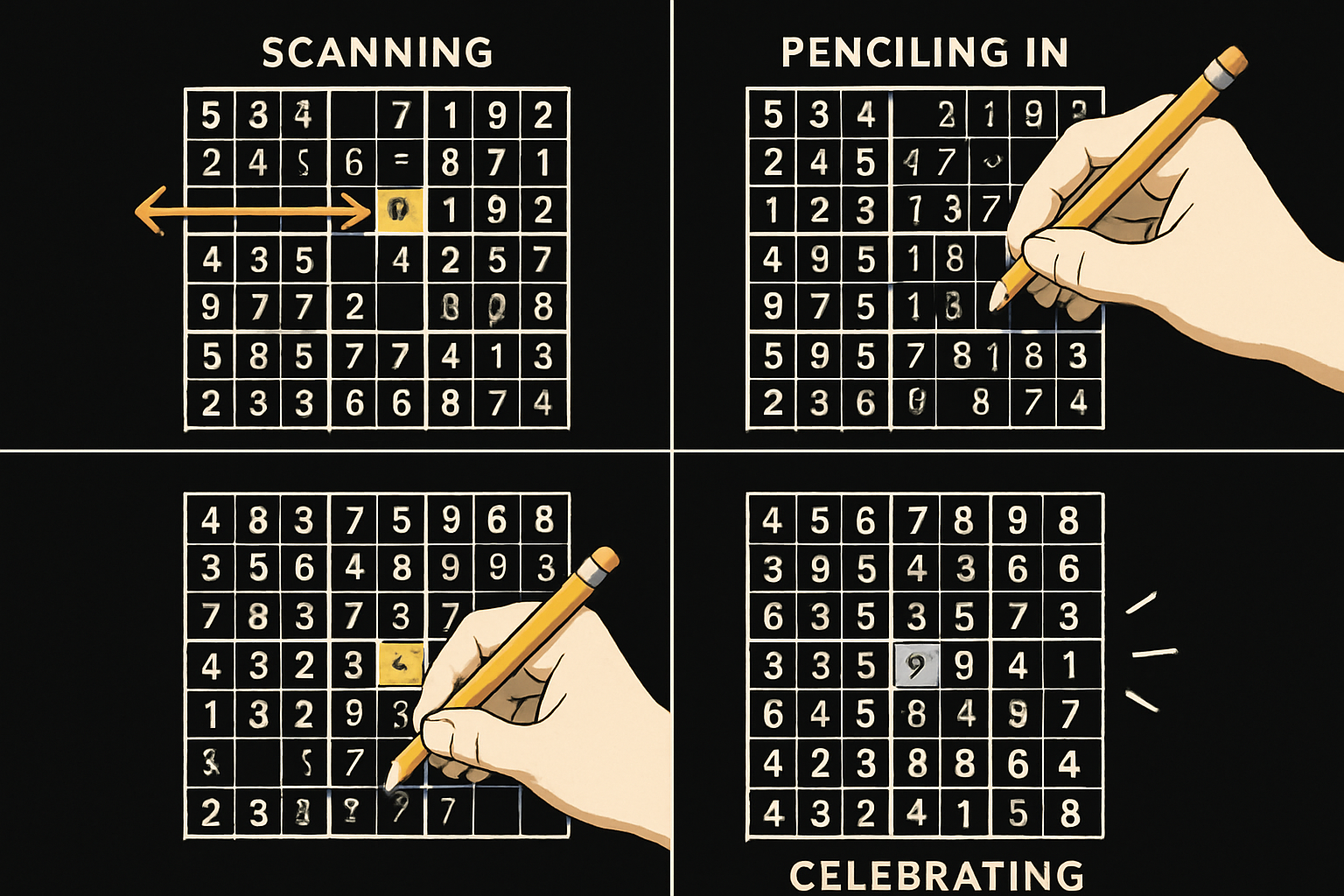
Step 1: Scan the Puzzle for Obvious Numbers
Start by scanning your Sudoku grid for rows, columns, or 3×3 boxes that are almost complete. Often, you’ll spot spaces where only one number is missing. This is the easiest way to play sudoku because it lets you fill in “singles” right away.
For example, if a row has every number except for 7, you can confidently write 7 in the empty cell. Repeat this process for columns and boxes. Don’t rush—take your time and let the obvious answers reveal themselves.
- Look for nearly complete rows, columns, or boxes.
- Fill in any cells with only one possible answer.
- Mark off completed rows to stay organized.
By starting with these easy wins, you’ll build momentum and set yourself up for the next solving steps. Remember, every filled cell makes the puzzle simpler!
Step 2: Use the Process of Elimination
The next step in the easiest way to play sudoku is to use the process of elimination. For each empty cell, consider which numbers are missing from the row, column, and box it belongs to. Cross off any numbers that already appear in these areas.
Let’s say you’re looking at a blank square in the middle box. The row already has 1, 2, 3, and the box has 4, 5, 6. That leaves only 7, 8, and 9 as possible candidates. Write these options lightly in pencil or use the note feature in a digital app.
- Check the row, column, and box for existing numbers.
- Eliminate impossible options.
- Narrow down the list of candidates for each cell.
This approach keeps your thinking organized and logical, making it the easiest way to play sudoku without getting stuck or frustrated.
Step 3: Pencil In Candidates (Notes)
After eliminating obvious choices, it’s time to pencil in possible numbers—also called “candidates”—for each empty cell. Writing small numbers in the corners of each box helps you track options and avoid mistakes. This habit is the backbone of the easiest way to play sudoku, especially as puzzles get more complex.
For example, if a cell could be 2, 5, or 8, jot those numbers in the cell. If you’re using a digital platform, take advantage of note-taking features for quick edits.
- Use pencil or digital notes for flexibility.
- Update candidates as you fill in more numbers.
- Erase or delete candidates when they’re no longer possible.
By keeping track of possibilities, you reduce guesswork and set yourself up for more advanced strategies later in the puzzle.
Step 4: Apply the “Only Choice” and “Only Place” Strategies
Now, let’s add two powerful techniques to your toolkit. The “Only Choice” strategy means that if a cell’s candidate list narrows down to one number, fill it in. The “Only Place” approach is when a number can only fit in one cell within a row, column, or box—even if other cells have multiple candidates.
For instance, if the number 6 is missing from a box and only one cell is available, write 6 there, even if other candidates exist. This method is a core part of the easiest way to play sudoku and unlocks hidden solutions.
- Review candidate lists for singles.
- Scan each row, column, and box for numbers that fit only one spot.
- Fill in cells as soon as you’re certain.
These strategies streamline your solving process and help you progress with confidence.
Step 5: Look for Hidden Singles and Naked Pairs
As you continue, some answers won’t be obvious at first glance. “Hidden singles” are numbers that must go in a specific cell, even if that cell has multiple candidates. “Naked pairs” occur when two cells in a row, column, or box can only contain the same two numbers, letting you eliminate those numbers from other cells in that area.
Spotting these patterns is often the easiest way to play sudoku at an intermediate level. For a deeper look at these techniques and more, check out Techniques for Solving Sudoku Puzzles.
- Search for hidden singles by comparing candidates in each box.
- Identify naked pairs and cross those numbers off other cells.
- Practice spotting these patterns in every puzzle.
Mastering these approaches will make even trickier puzzles feel manageable.
Step 6: Repeat and Refine the Process
Sudoku is all about iteration. After each round of filling in singles, using elimination, and updating notes, scan the entire grid again. As more cells are filled, the puzzle becomes less cluttered and new opportunities appear.
Repetition is truly the easiest way to play sudoku effectively. Continue cycling through each strategy, refining your notes, and updating possibilities as you go.
- Re-scan the grid after each major step.
- Update and erase candidates that are no longer valid.
- Don’t be afraid to backtrack if you spot a mistake.
By repeating these steps, you’ll see your progress accelerate until only a handful of empty cells remain.
Step 7: Check for Mistakes and Correct as You Go
Mistakes happen, even to experienced players. That’s why regularly checking your work is part of the easiest way to play sudoku. Look for duplicate numbers in rows, columns, or boxes. If you’re using an app, the “undo” function is your friend. On paper, use an eraser and keep your notes tidy.
- Review filled cells after each round.
- Double-check that each row, column, and box has only unique numbers.
- Fix errors as soon as you spot them to avoid bigger issues later.
Staying vigilant helps you maintain accuracy and finish puzzles with confidence.
Step 8: Celebrate Completing Your First Sudoku
Congratulations—you’ve reached the final step! Solving your first puzzle using the easiest way to play sudoku is a rewarding experience. Take a moment to enjoy your accomplishment.
Celebrate your progress, and don’t hesitate to try more challenging puzzles as you build your skills. Remember, each solved puzzle is a step closer to mastering Sudoku.
- Reflect on what you learned.
- Share your success with friends or online communities.
- Set a goal for your next puzzle, whether it’s a new difficulty or a faster solve time.
With practice and these simple strategies, anyone can become a confident Sudoku solver.
Step 3: Avoiding Common Mistakes and Pitfalls
Learning the easiest way to play sudoku isn’t just about knowing the rules—it’s also about steering clear of typical mistakes. Beginners and even casual players often fall into familiar traps that can slow progress or make puzzles feel impossible. Let’s break down these common pitfalls and show you how to sidestep them.

Rushing Through the Puzzle
Trying to speed through a sudoku grid might seem tempting, but it rarely leads to success. The easiest way to play sudoku is to take your time, scan each row, and double-check your moves. Skipping steps—like penciling in possible numbers or rechecking your work—can cause errors that are hard to fix later.
- Slow down and enjoy the process.
- Use a pencil or digital undo feature.
- Check each entry before you move on.
By going slowly, you’ll build accuracy and confidence in every puzzle.
Forgetting the Rules
It’s easy to lose sight of the core sudoku rules when you’re focused on filling in numbers. The easiest way to play sudoku is to constantly remind yourself: every row, column, and 3×3 box must contain each number from 1 to 9 once. Forgetting this can lead to accidental repeats and dead ends.
- Keep the rules visible at your workspace.
- Review your filled rows and boxes regularly.
- Use checklists or highlight errors if you’re using a digital platform.
Following the rules closely ensures your solutions are always valid.
Guessing Instead of Using Logic
Some players get stuck and start guessing, hoping to stumble onto the right answer. But the easiest way to play sudoku is to rely on logic, not luck. Guessing often leads to mistakes that become clear only much later in the puzzle, making it hard to recover.
- Use elimination and pencil marks for each cell.
- If you’re unsure, skip and return later.
- Trust that every puzzle has a logical solution.
Resist the urge to guess—logical thinking always wins in sudoku.
Not Using Pencil Marks Effectively
Pencil marks (or digital notes) are your best friend when searching for the easiest way to play sudoku. Skipping this step can leave you confused about possible options, especially as the puzzle gets harder.
- Make small notes of possible numbers in each cell.
- Update or erase notes as you fill in answers.
- Use different symbols or colors if it helps you stay organized.
Effective use of pencil marks keeps your thinking clear and prevents simple mistakes.
Overlooking Hidden Singles and Patterns
The easiest way to play sudoku involves more than just filling in obvious answers. Some solutions are hidden in patterns—like “hidden singles” or matching pairs. Overlooking these can leave you stuck, even when the solution is right in front of you.
- Scan for numbers that can only fit in one spot.
- Look for pairs or trios of candidates that repeat.
- Practice spotting these patterns in every puzzle.
With a sharp eye, you’ll unlock puzzles that once seemed impossible.
Ignoring the Benefits of Practice
Improvement in sudoku comes from regular practice. The easiest way to play sudoku well is to solve puzzles daily, gradually increasing the difficulty. Studies show that players who practice consistently see up to 30% better accuracy. To keep things fresh, try different formats—like printable sudoku games and resources available here.
- Set aside a few minutes each day for a puzzle.
- Mix digital and printable puzzles for variety.
- Track your progress and celebrate small wins.
Consistency is the secret to mastery.
Getting Discouraged by Difficult Puzzles
Everyone encounters tough puzzles. It’s normal to feel frustrated, but don’t let it stop you. Start with easier grids, like 4×4 or 6×6, and work your way up. As you learn the easiest way to play sudoku, you’ll find that challenging puzzles become more manageable over time.
- Begin with puzzles marked “easy.”
- Join online communities for support and tips.
- Remember, every expert was once a beginner.
Stay positive, and let each puzzle boost your confidence.
Step 4: Advancing Your Skills—Tips, Strategies, and Resources for 2025
Ready to take your Sudoku skills to the next level? Once you’ve mastered the basics, it’s time to explore new strategies, resources, and routines that will make the easiest way to play sudoku even more enjoyable. Let’s dive into advanced techniques, community support, and habits that will keep you sharp and motivated in 2025.
Mastering Intermediate and Advanced Techniques
As you grow more comfortable, learning advanced techniques becomes the easiest way to play sudoku with confidence. Techniques like X-Wing, Swordfish, and coloring help you tackle tougher puzzles that simple scanning and elimination can't solve.
Here’s a quick comparison of popular strategies:
| Technique | When to Use | Benefit |
|---|---|---|
| X-Wing | Stuck with candidates | Eliminates options |
| Swordfish | Large puzzles | Finds hidden patterns |
| Coloring | Complex logic needed | Tracks possibilities |
Curious about these methods? You can explore A Review on Different Strategies of Solving Sudoku Puzzles for a deeper dive into how they work. Mastering these approaches will unlock new layers of challenge and satisfaction in your Sudoku journey.
Practicing with Different Puzzle Types
Trying different puzzle styles is the easiest way to play sudoku while keeping things fresh. Move beyond the classic 9×9 and experiment with 4×4, 6×6, or even giant 16×16 grids. Each size tests your logic in new ways and helps you adapt to varied challenges.
Variants like Killer Sudoku or Hyper Sudoku introduce fresh twists, requiring you to combine number placement with unique rules. By exploring new types, you’ll sharpen your skills and never get bored. Think of it as cross-training for your brain—variety builds flexibility and resilience.
Leveraging Digital Tools and Sudoku Apps
Modern apps and online platforms make the easiest way to play sudoku more accessible than ever. With features like hints, undo, and note-taking, digital tools can accelerate your learning curve and help you practice efficiently.
If you want to play right now, Play Sudoku Online Instantly offers free access to puzzles of all difficulties, with no registration required. Many apps also provide daily challenges, progress tracking, and interactive tutorials—perfect for building skills at your own pace.
Try out different options and discover which digital features help you stay motivated and organized as you advance.
Joining Sudoku Communities and Forums
Connecting with other Sudoku fans can supercharge your progress. Online forums and Discord servers are packed with people who love sharing tips, discussing strategies, and exchanging puzzles.
Popular communities include:
- Reddit’s r/sudoku
- Sudoku.com forums
- Discord Sudoku servers
Joining these groups can reveal the easiest way to play sudoku by exposing you to new solving patterns and collaborative problem-solving. Plus, it’s a great way to stay inspired and make new friends who share your passion.
Tracking Your Progress and Setting Goals
Monitoring your improvement is a powerful motivator. Use journals, spreadsheets, or app analytics to record your solve times, accuracy, and favorite techniques.
Set achievable goals, like “solve one puzzle daily” or “beat my best time this week.” Tracking small wins makes the easiest way to play sudoku more rewarding and keeps you focused on growth. Over time, you’ll see just how far your skills have come.
Exploring Printable and Offline Resources
Prefer to solve puzzles away from screens? Sudoku books and printable PDFs are fantastic for focused practice. Offline resources let you unplug, slow down, and enjoy the tactile pleasure of solving with pencil and paper.
Look for books with graded difficulty or themed collections. Printables are also easy to find online and can be tailored to your preferred level. In 2023, print Sudoku book sales rose by 12%, showing that traditional formats are still a favorite part of the easiest way to play sudoku.
Staying Motivated and Making Sudoku a Habit
Building a daily Sudoku routine is the secret ingredient for lasting improvement. Set aside a few minutes each day—maybe with your morning coffee or as a relaxing break at night.
Mix up puzzle types, track your streak, and celebrate milestones. The easiest way to play sudoku is to make it a habit that fits your lifestyle, turning each puzzle into a moment of mindful relaxation and brain training.
Now that you’ve seen just how easy it is to start solving Sudoku, why not put your new skills into practice? Whether you’re a total beginner or just brushing up, playing online gives you instant access to puzzles at any level—plus helpful features like hints and note-taking. The best part? You can dive in right away, no signup needed. If you ever get stuck, you can always refer back to this guide or explore even more tips and strategies on our site. Ready to challenge yourself and have some fun? Play Sudoku Online!