The Untold Sudoku History: From Indiana to the World
Sudoku is one of the most widely played puzzles in the world — published daily in thousands of newspapers, solved by millions of people on phones and tablets, and the subject of international championships. Yet most people who play it every day have no idea where it came from, who invented it, or why it has a Japanese name despite not originating in Japan. The history of sudoku is more surprising than most players expect.
The Origin of Sudoku: Not Japan
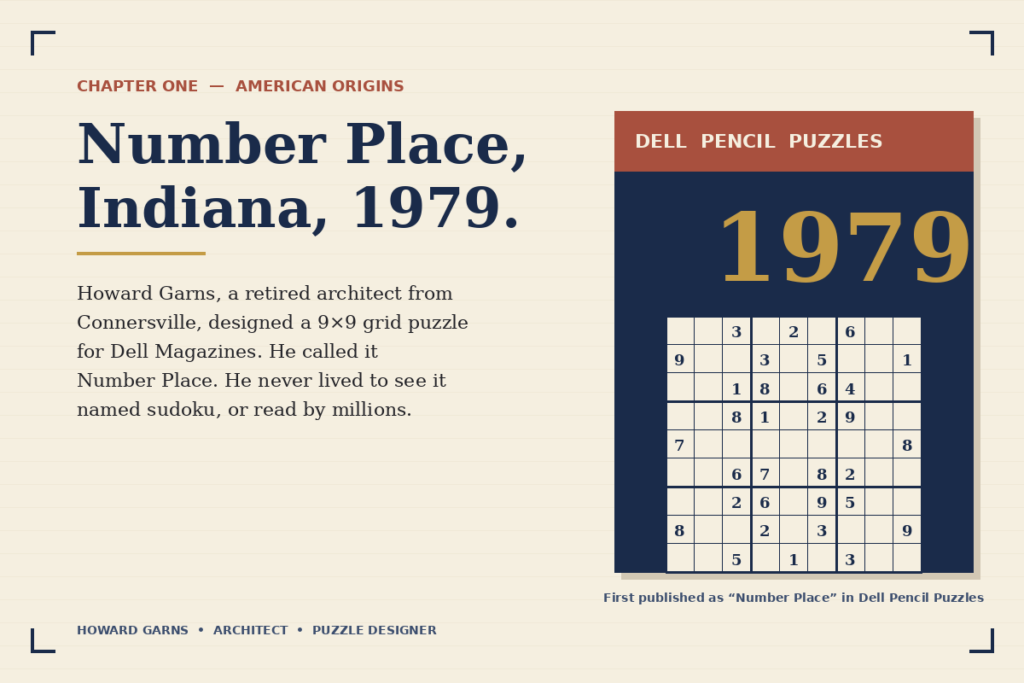
The most common misconception about sudoku is that it is a Japanese invention. The name is Japanese, the puzzle became internationally famous through Japan, and Japanese publishers refined and popularised it — but the modern sudoku puzzle was created by an American.
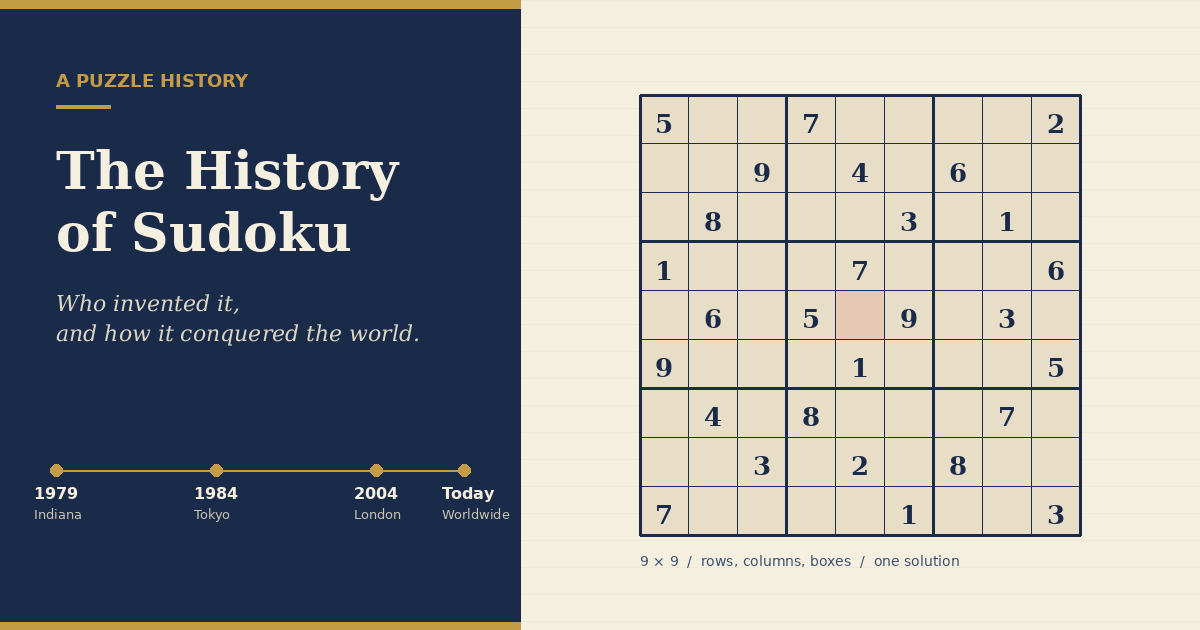
Howard Garns was an architect from Connersville, Indiana. In his retirement he worked as a freelance puzzle designer, contributing puzzles to Dell Magazines. In 1979, Dell published his puzzle under the name “Number Place” in the magazine Dell Pencil Puzzles & Word Games.
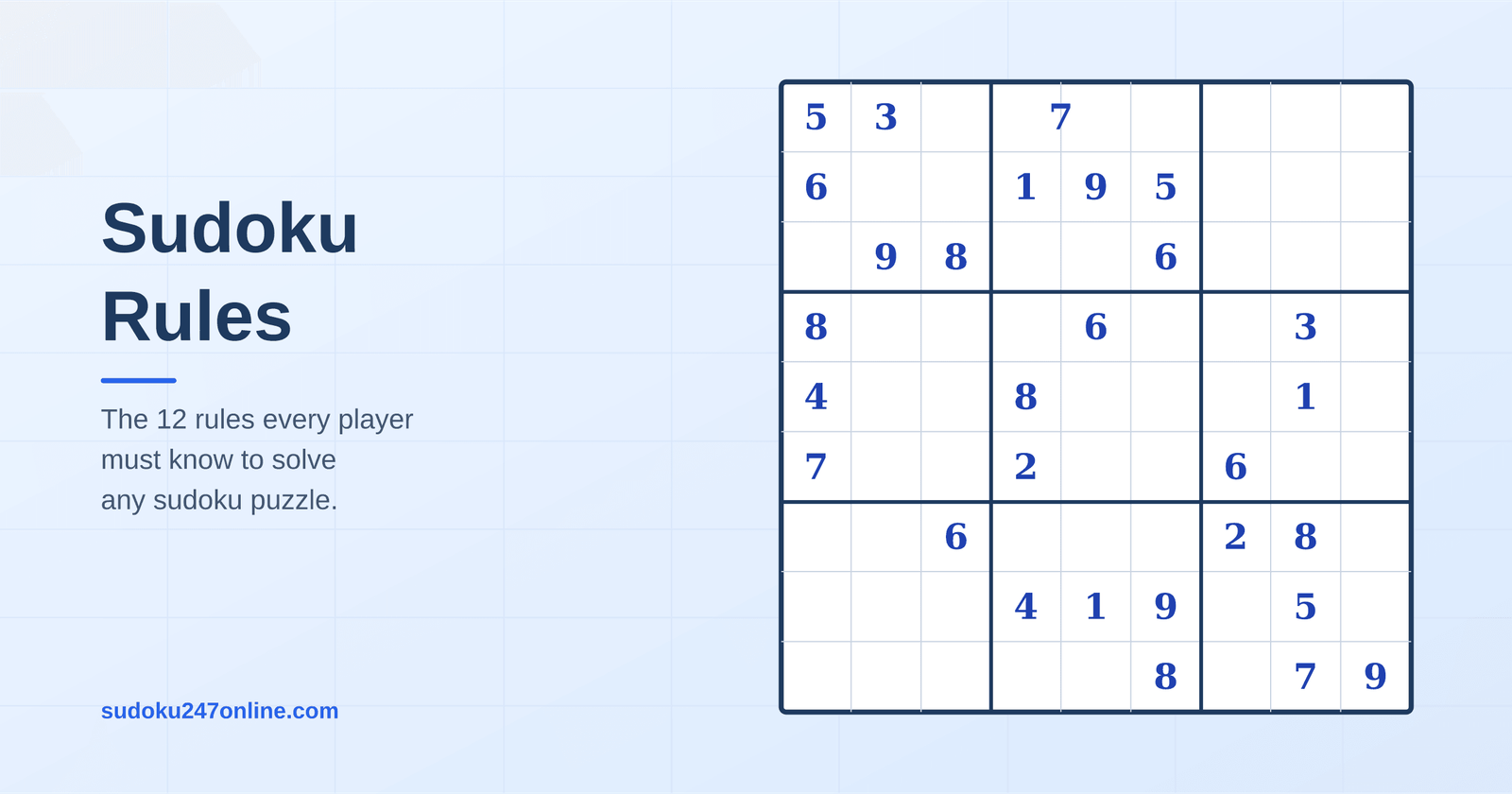
Number Place was essentially identical to modern sudoku: a 9×9 grid divided into 3×3 boxes, with some numbers pre-filled, requiring the solver to complete the grid so that each row, column, and box contained every number from 1 to 9 exactly once.
Garns never saw his puzzle become a global phenomenon. He died in 1989, more than fifteen years before sudoku took the world by storm.
The Latin Square: The Mathematical Ancestor
The mathematical concept underlying sudoku is much older than Howard Garns. The Latin square — a grid in which each symbol appears exactly once in every row and column — was studied by the Swiss mathematician Leonhard Euler in the 18th century.
Euler’s work on Latin squares in the 1780s laid the theoretical groundwork for what would eventually become sudoku, though Euler was working on abstract mathematical problems rather than recreational puzzles. The additional constraint in sudoku — that each 3×3 box must also contain each number exactly once — was Garns’ contribution.
Sudoku Comes to Japan
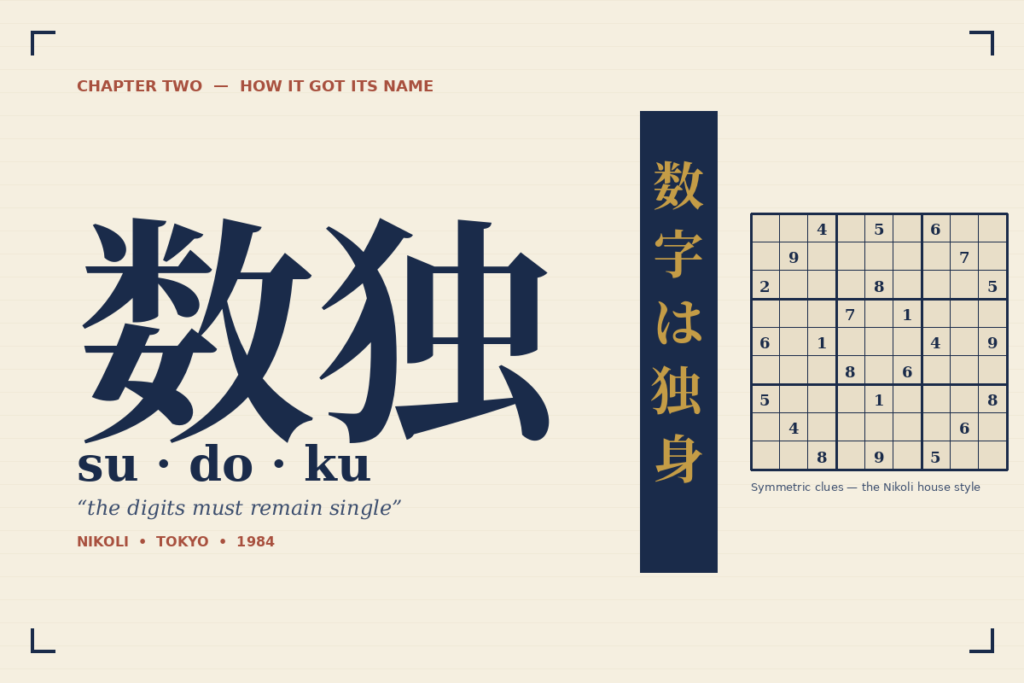
Number Place was published quietly in the United States throughout the late 1970s and early 1980s without attracting significant attention. That changed when the puzzle reached Japan.
In 1984, Nikoli — one of Japan’s leading puzzle publishers — discovered Number Place and introduced it to Japanese readers. Nikoli made two significant changes. First, they gave it a new name: Sūji wa dokushin ni kagiru (数字は独身に限る), meaning “the digits must remain single” — shortened to sudoku (数独). Second, they imposed a constraint that the given numbers in each puzzle must be placed symmetrically, which became standard in Japanese sudoku publishing and gave the puzzles a more elegant appearance.
Sudoku became enormously popular in Japan through the late 1980s and 1990s. It appeared in puzzle magazines, newspapers, and dedicated sudoku publications. Japan developed a thriving competitive sudoku community and produced some of the world’s most skilled solvers.
The Global Explosion: 2004-2005
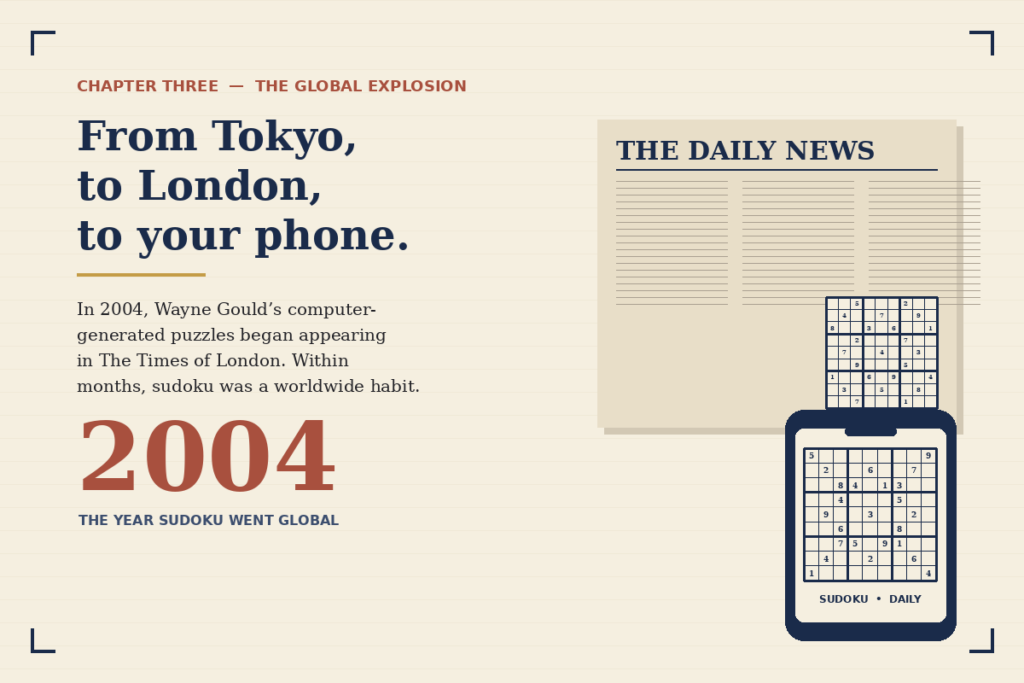
For two decades, sudoku remained largely a Japanese phenomenon. That changed through the efforts of one man.
Wayne Gould, a retired judge from New Zealand who had been living in Hong Kong, discovered sudoku in a Tokyo bookshop in 1997. Fascinated by the puzzle, he spent six years writing a computer program that could generate sudoku puzzles automatically.
In 2004, Gould approached The Times of London and persuaded the newspaper to publish his computer-generated sudoku puzzles. The Times began running sudoku on 12 November 2004. The response was immediate and overwhelming.
Within weeks, virtually every major British newspaper had added sudoku to its puzzle pages. By mid-2005 the puzzle had spread to newspapers across North America, Australia, and Europe. Puzzle books sold in the millions. The word “sudoku” entered common usage worldwide.
The timing was significant. The rise of smartphones was just beginning. As mobile devices became more common, sudoku was one of the first puzzle games to become a mobile staple — easy to understand, quick to play for a few minutes, and infinitely replayable. This accelerated the puzzle’s spread beyond newspaper readers to a global digital audience.
Competitive Sudoku
The first World Sudoku Championship was held in Lucca, Italy in 2006, organised by the World Puzzle Federation. Twenty-two countries sent competitors. The championship has been held annually ever since, with competitors from dozens of countries competing across standard and variant sudoku formats.
The competitive sudoku community has developed extraordinarily difficult puzzle variants — killer sudoku, samurai sudoku, diagonal sudoku, and many others — that extend the core rules in challenging new directions.
You can learn more about the World Sudoku Championship from the World Puzzle Federation.
Why Sudoku Endures
Sudoku has remained popular for over forty years since Howard Garns first published Number Place, and for twenty years since it became a global phenomenon. Several qualities explain its lasting appeal.
The rules are simple enough to explain in under a minute. The challenge scales from trivially easy to fiendishly difficult within the same rule set. The puzzle requires no language, no cultural knowledge, and no mathematics — making it universally accessible. And every puzzle has exactly one logical solution, providing the deep satisfaction of a clean, verifiable answer.
These qualities make sudoku one of the few puzzle formats that genuinely works for players of all ages, backgrounds, and skill levels — from children just learning logic to competitive solvers who complete expert grids in under two minutes.
Play a free sudoku puzzle and experience the puzzle that a retired American architect invented, a Japanese publisher named, and a retired New Zealand judge brought to the world. New to the game? Read the how to play guide or start with an easy puzzle to learn the basics.