Hidden Pairs in Sudoku — How to Spot and Use Them
Hidden pairs is one of those techniques that feels like magic the first time you use it. Two candidates are hiding in plain sight, locked into just two cells — and once you see them, you can eliminate everything else from those cells and often unlock a chain of progress. This guide explains what hidden pairs are, how they differ from naked pairs, and how to find and use them in your puzzles.
What Are Hidden Pairs?
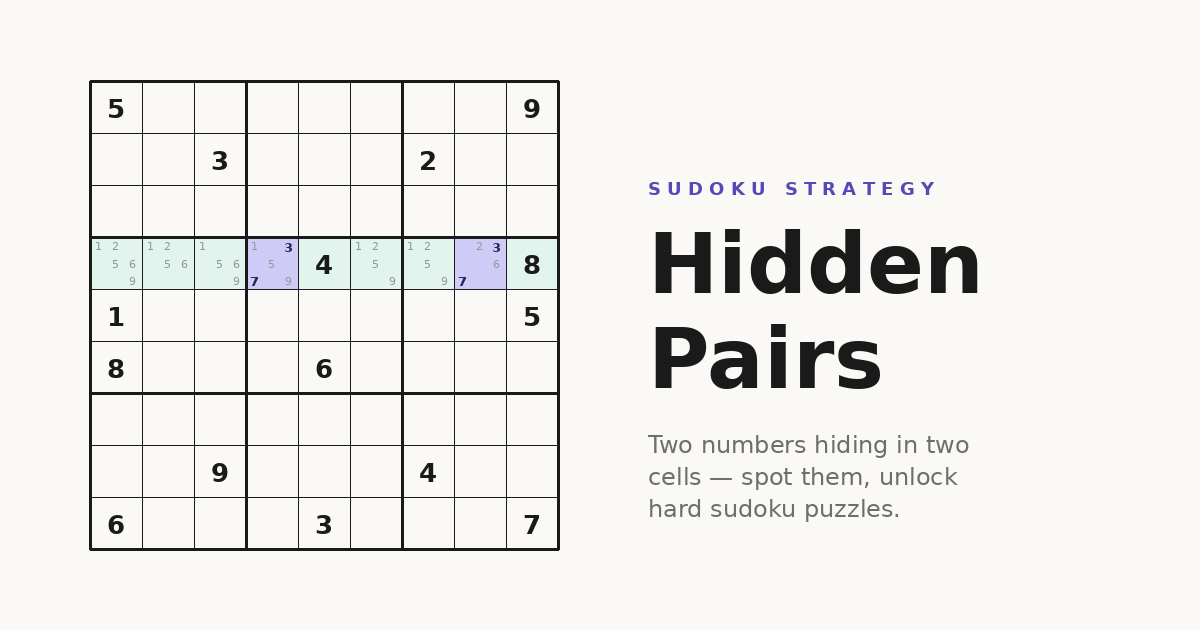
A hidden pair occurs when two numbers appear as candidates in exactly two cells within the same row, column, or box — and those two numbers do not appear anywhere else in that unit.
The word “hidden” refers to the fact that those two cells also contain other candidates. The pair is buried among other numbers, which is why it can be easy to miss. Once you identify the hidden pair, you can eliminate all other candidates from those two cells — because the two paired numbers must occupy exactly those two cells, leaving no room for anything else.
Hidden Pairs vs Naked Pairs
These two techniques are related but work slightly differently.
A naked pair is when two cells in the same unit each contain exactly the same two candidates and nothing else. The pair is obvious — the cells have only two candidates each. You use a naked pair to eliminate those two numbers from other cells in the same unit.
A hidden pair is when two numbers are confined to exactly two cells in a unit, but those cells also contain other candidates. The pair is hidden among the noise. You use a hidden pair to eliminate the other candidates from those two cells.
Both techniques are valuable. Naked pairs are usually easier to spot. Hidden pairs require more careful scanning but can unlock progress that naked pairs cannot.
When Do You Need Hidden Pairs?
Hidden pairs become necessary on medium and hard puzzles when basic scanning has stopped working. If you have applied all the naked singles and hidden singles you can find and the puzzle is still stuck, look for pairs — both naked and hidden.
Hidden pairs are particularly useful when a unit has many candidates per cell and progress feels impossible. Finding a hidden pair cuts the candidates in two cells down to just two each, which often reveals naked singles or other patterns elsewhere.
How to Find Hidden Pairs — Step by Step
Step 1. Choose a unit — a row, column, or 3×3 box.
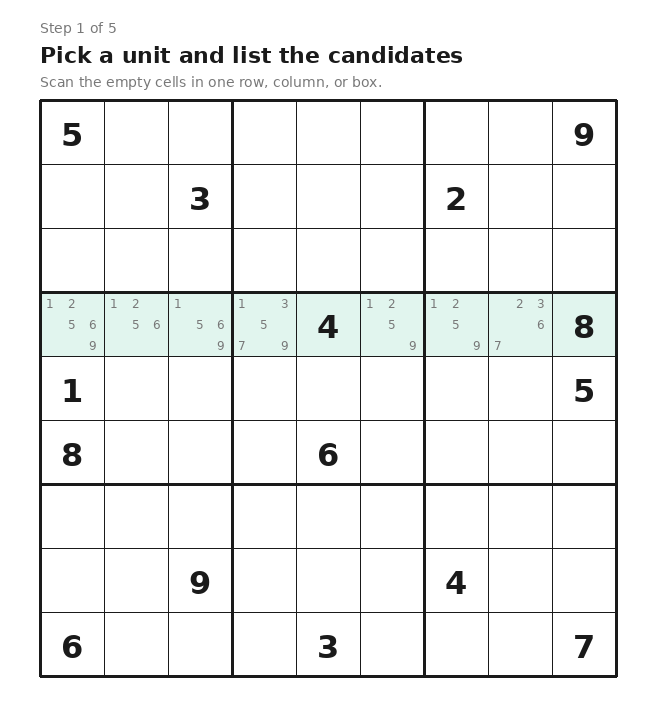
Step 2. For each number that still needs to be placed in that unit, note which cells it appears in as a candidate.
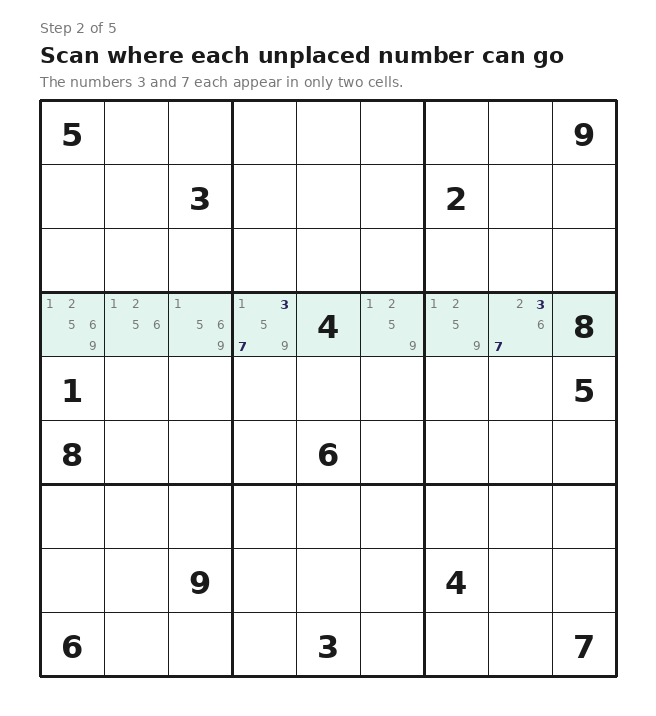
Step 3. Look for two numbers that each appear in exactly the same two cells — and only those two cells — within the unit.
Step 4. When you find two numbers that share exactly the same two cells, you have a hidden pair. Those two numbers must go in those two cells — one in each, though you do not yet know which way round.
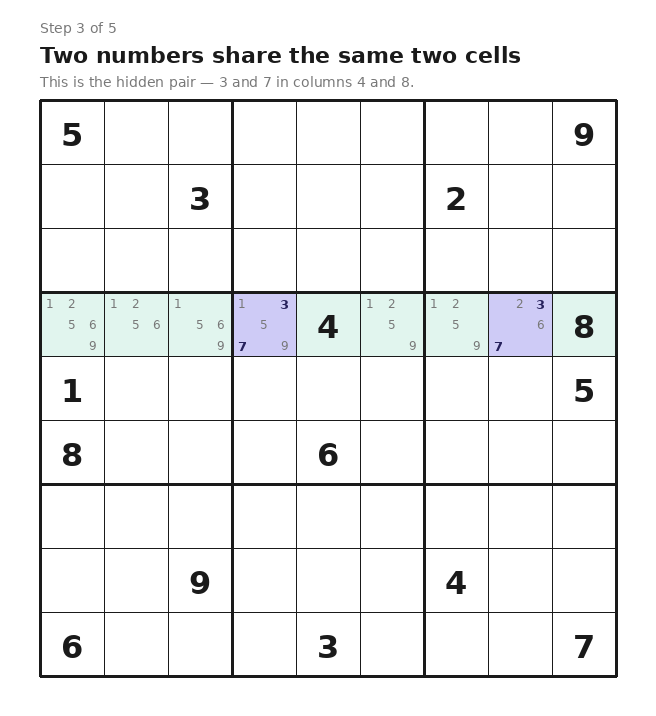
Step 5. Eliminate all other candidates from those two cells. Keep only the two paired numbers. Everything else can be crossed out.
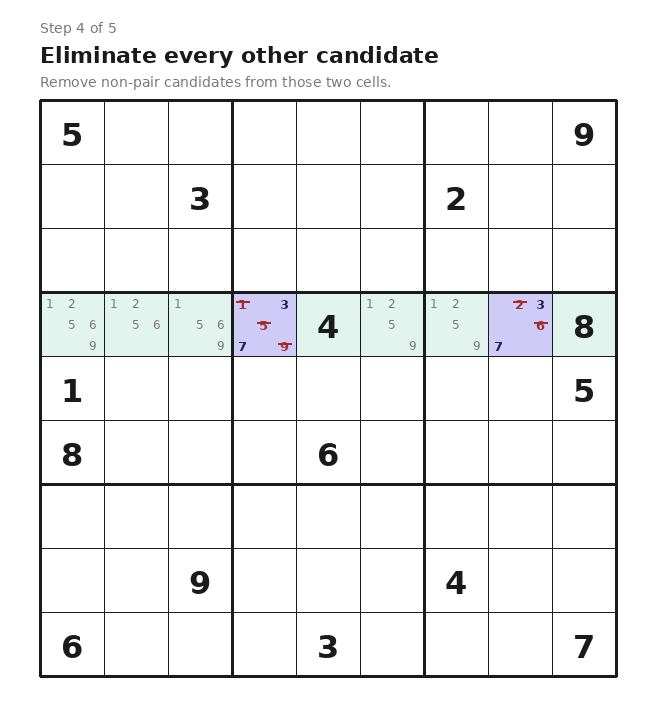
Step 6. Check whether this elimination has created any naked singles or other opportunities elsewhere in the puzzle.
A Concrete Example
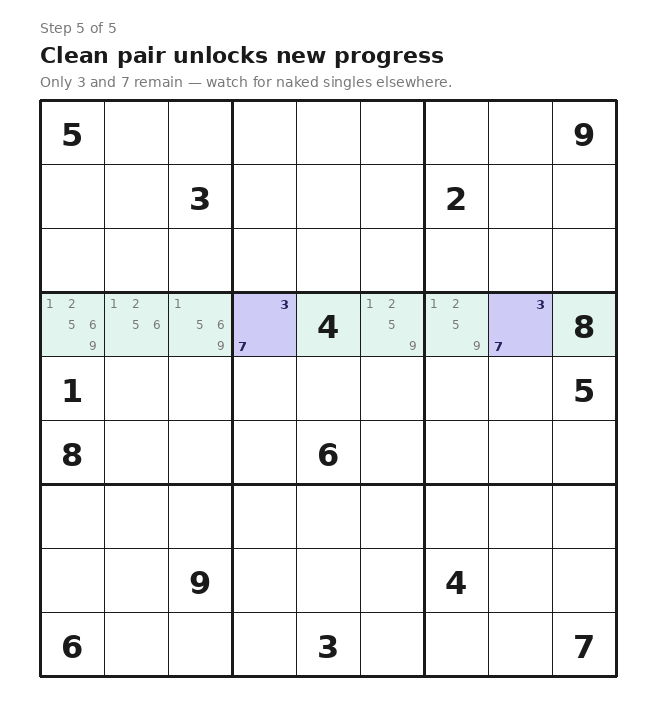
Imagine you are looking at a row with several empty cells. You notice that the number 3 appears as a candidate in only two cells — say cells in columns 4 and 8. You also notice that the number 7 appears as a candidate in only those same two cells — columns 4 and 8. No other cells in that row have 3 or 7 as candidates.
That is your hidden pair. The numbers 3 and 7 must go in columns 4 and 8. You do not know which goes where yet, but you know those two cells are reserved for 3 and 7. Every other candidate in those two cells — say 1, 5, and 9 in column 4, and 2 and 6 in column 8 — can be eliminated.
After eliminating those candidates, look at what has changed. Another cell in the row may now have only one candidate remaining — a naked single. Or a column that shares one of those cells may now have a hidden single visible. Progress tends to cascade after a hidden pair is found.
Hidden Triples and Beyond
The same logic extends to three numbers and three cells — a hidden triple. Three numbers that each appear in only the same three cells within a unit can be treated the same way: eliminate all other candidates from those three cells.
Hidden triples are rarer and harder to spot, but they follow identical logic. Once you are comfortable finding hidden pairs, hidden triples become a natural next step. If you want a technical deep-dive covering hidden pairs, triples, and quads with multiple worked examples, the hidden candidates reference on SudokuWiki is the most thorough resource available.
Tips for Spotting Hidden Pairs Faster
Scan by number rather than by cell. Instead of looking at each empty cell and listing its candidates, look at each unplaced number in a unit and list which cells it can go in. When two numbers share exactly the same two cells, you have found your hidden pair.
Using pencil marks or the notes feature in an online puzzle makes this much easier. Without candidate tracking, hidden pairs are almost impossible to spot reliably.
Try a hard sudoku puzzle where hidden pairs become necessary. Once you can find hidden pairs consistently, move on to advanced sudoku tips or explore the X-Wing strategy for the next level of challenge. Browse all techniques in the sudoku strategies guide.