Sudoku Meaning: The Japanese Word and Its Surprising Origin
Sudoku is one of the most recognised puzzle names in the world, but most people who play it daily have never thought about what the word actually means. The answer is simpler than you might expect — and the history of where the puzzle came from is more surprising.
What Does Sudoku Mean in Japanese?
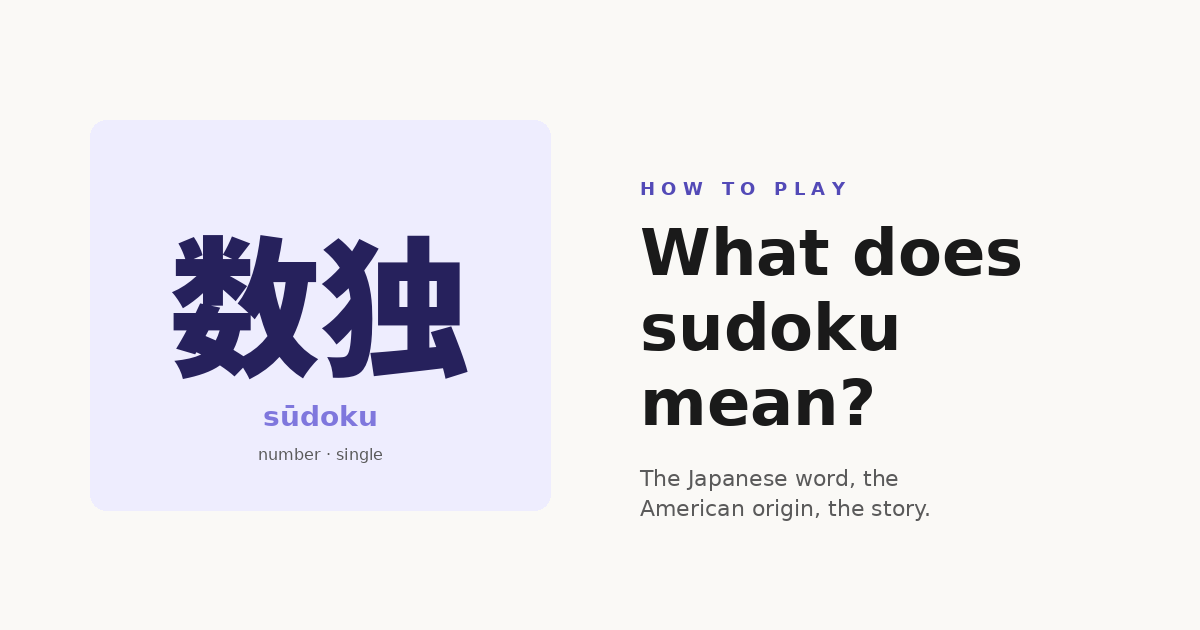
Sudoku is a Japanese word, or more precisely, a Japanese abbreviation. The full phrase it comes from is Sūji wa dokushin ni kagiru (数字は独身に限る), which translates roughly to “the digits must remain single” or “each digit appears only once.”
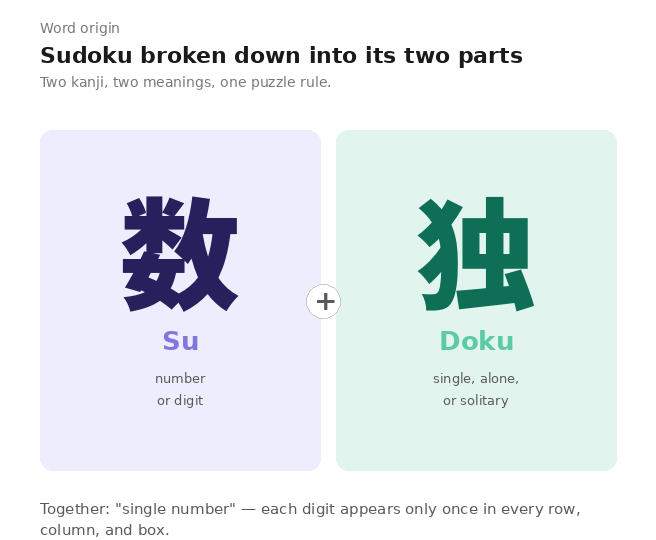
The word sudoku itself is made up of two parts:
Su (数) — meaning number or digit.
Doku (独) — meaning single, alone, or solitary.
Put together, sudoku means “single number” or “number that must be alone” — a direct reference to the core rule of the puzzle: each number can appear only once in every row, column, and box.
The name was shortened from the longer phrase in the 1980s when the puzzle began appearing in Japanese puzzle magazines, and the abbreviated form stuck.
Is Sudoku Actually Japanese?
This is where the history gets interesting. Despite the Japanese name and its enormous popularity in Japan, sudoku did not originate in Japan.
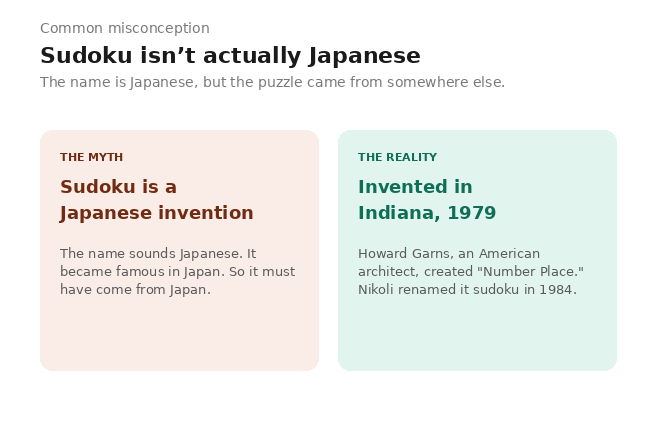
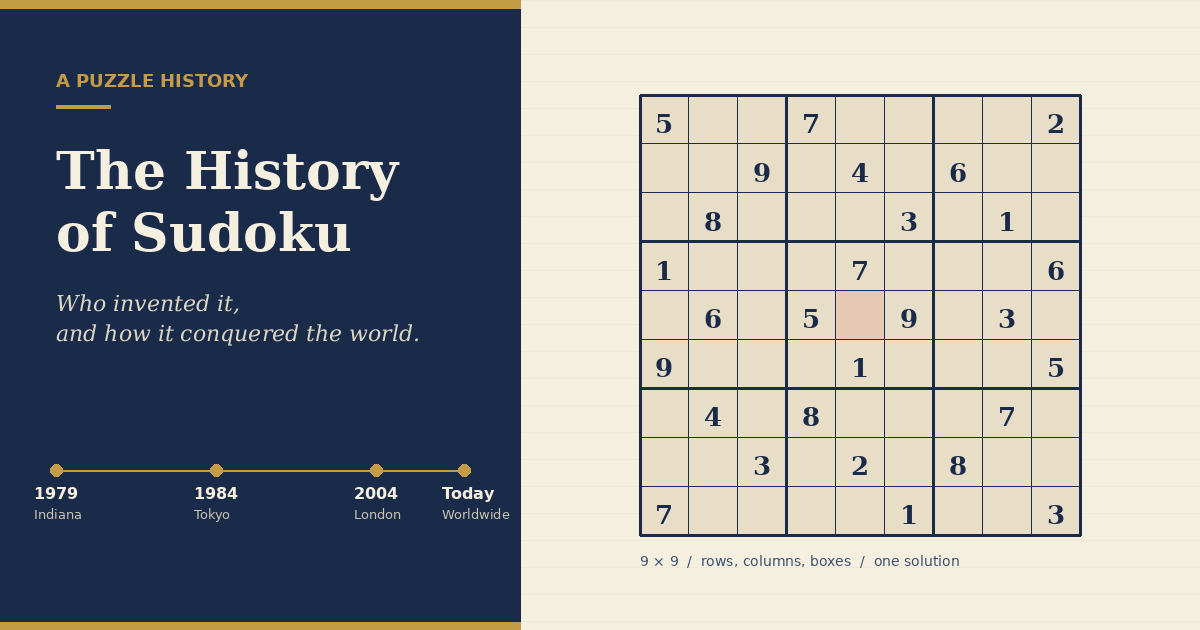
The modern version of the puzzle was created by Howard Garns, an American architect and puzzle designer from Indiana. He published it in 1979 under the name “Number Place” in a puzzle magazine called Dell Pencil Puzzles & Word Games. Garns died in 1989, before he saw the puzzle become a global phenomenon.
The puzzle was picked up by a Japanese publisher, Nikoli, in 1984. They renamed it sudoku, made some refinements to the format, and it became extremely popular in Japan throughout the late 1980s and 1990s.
How Sudoku Became a Global Phenomenon

For almost two decades, sudoku was primarily a Japanese puzzle. That changed in 2004 when a retired Hong Kong judge named Wayne Gould brought it to Britain. Gould had discovered sudoku in Japan, spent years writing a computer program to generate puzzles, and eventually convinced The Times of London to publish them.
The Times began running sudoku puzzles in November 2004. Within months, virtually every major British newspaper had followed. The puzzle spread rapidly from Britain to the United States, Australia, and the rest of the English-speaking world through 2005 and 2006.
By 2007, sudoku was being published in newspapers in dozens of countries and sold in millions of puzzle books worldwide. World Sudoku Championships began in 2006. The puzzle had gone from a Japanese magazine feature to a global daily habit in a remarkably short time. The full documented history of sudoku on Wikipedia covers the timeline in detail, including the early French newspaper precursors in the 19th century and Maki Kaji’s role as the Nikoli editor who coined the abbreviated name.
Why the Name Sudoku and Not Number Place?
The Japanese name simply stuck. When the puzzle spread from Japan to the English-speaking world via newspapers, it came with the name sudoku already attached. “Number Place” — Howard Garns’ original name — was largely forgotten outside of puzzle collector circles.
Sudoku is also arguably a better name. It is short, distinctive, and easy to remember. Number Place is descriptive but generic. Sudoku became the brand.
What Makes Sudoku Different from Other Number Puzzles?
Sudoku is often confused with maths puzzles because it uses numbers, but this is a misconception. The numbers 1 through 9 are used purely as symbols. You could replace them with letters A through I, or with nine different colours, and the puzzle would be identical. No arithmetic is involved at any point.
What makes sudoku distinctive is its pure logical structure. The constraints — one of each number per row, column, and box — create a puzzle that has exactly one solution and can always be solved through deduction alone. No guessing, no calculation, just logic applied systematically to a grid.
This is why sudoku appeals across languages, cultures, and age groups. The rules are universal and the challenge is purely mental.
Try a free sudoku puzzle and see the logic for yourself. If you are new to the game, the how to play guide covers everything you need to start solving. And if you are curious about whether sudoku is actually good for you, read is sudoku good for your brain.